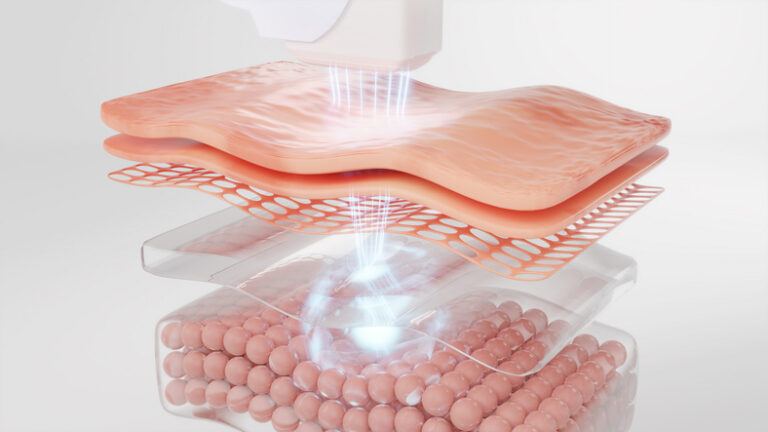
What Can Happen to Your Skin During Rapid Weight Loss 
Rapid weight loss is everywhere right now — on social media, around dinner tables, and in everyday conversations. From keto-style eating plans to other therapies, the focus on losing weight has reached a new level of intensity. But while the scales may shift quickly, what impact does rapid weight loss have on your skin — during the process and after the weight has come off?
Alongside changes in weight and metabolism, many people notice changes in their skin — particularly the face and body.They are more accurately linked to rapid weight loss, changes in fat distribution, and shifts in collagen support. Understanding what’s happening can help set realistic expectations and guide appropriate skin care and dermatology-led support.
Why Skin Can Change During Rapid Weight Loss
Skin relies on a combination of:
- Collagen (structure and support)
- Elastin (stretch and recoil)
- Subcutaneous fat (volume and contour)
- Hydration and barrier integrity
When weight loss occurs quickly, the underlying fat that once supported the skin may be reduced faster than the skin can adapt. At the same time, collagen production naturally slows with age, which can make skin changes more noticeable.
Commonly reported skin concerns include:
- Loss of facial fullness
- Increased skin laxity
- Fine lines appear more visible
- Crepey or loose skin on the body
- Changes in overall skin texture
The changes are not specific to any one weight-loss method and are more accurately related to weight loss and collagen dynamics.
The Role of Collagen in These Skin Changes
Collagen is the main structural protein in skin, providing strength and support. From the late 20s onward, collagen production gradually declines, typically by about 1% per year.
During rapid weight loss:
- There may be less underlying support for the skin
- Existing collagen networks may be less able to compensate
- Skin may appear thinner or less firm
This does not mean collagen is “lost overnight,” but rather that age-related collagen changes become more visible when volume changes occur quickly.
What You Can Do to Support Skin Health
While skin changes can be confronting, there are supportive strategies that may help improve skin quality, texture and resilience over time.
1. Topical Skincare Support
Topical skincare cannot replace collagen, but it can help support the skin environment.
Commonly recommended approaches include:
- Broad-spectrum sunscreen to reduce collagen breakdown from UV exposure
- Barrier-support moisturisers (ceramides, glycerin, hyaluronic acid)
- Topical vitamin C to support antioxidant protection
- Prescription or dermatologist-guided retinoids, where appropriate, to support skin renewal
Any active skincare should be introduced gradually and tailored to individual skin needs.
2. Dermatology-Led Treatments for Skin Texture and Support
At Enrich Clinic and Dermatology Institute of Victoria, dermatologists assess skin changes in the context of overall health, age, skin type and rate of weight loss.
Depending on individual needs, supportive treatments may include:
Laser and Energy-Based Treatments
Certain laser and energy-based devices are used to support skin quality and texture by stimulating natural repair pathways in the skin. These treatments are not instant fixes, but may contribute to gradual improvements over time.
Medical Microneedling
Microneedling creates controlled micro-channels in the skin, triggering repair processes that can support texture and skin quality.
Skin Quality Treatments
Some dermatology-led treatments focus on improving hydration, skin density and overall quality, rather than volume or dramatic change.
All treatments are individualised and discussed in detail during consultation.
Why a Dermatology Assessment Matters
Skin changes during weight loss can vary significantly between individuals. Factors include:
- Age and baseline collagen levels
- Speed of weight loss
- Sun exposure history
- Hormonal status
- Overall skin health
A dermatologist can help determine which changes are expected, which may be treatable, and which require a more conservative, long-term approach.
FAQs
Why does skin look looser after weight loss?
When fat volume decreases quickly, skin may not immediately adapt. Reduced collagen and elastin with age can make skin laxity more visible.
Are these changes permanent?
Skin changes associated with weight loss are not necessarily permanent. Skin quality may improve over time, and dermatologist-guided treatments may help support texture and resilience.
Can collagen supplements fix skin changes?
Collagen supplements are broken down into amino acids during digestion. While they contribute to overall protein intake, they do not directly restore collagen in the skin.
What treatments help skin after weight loss?
Treatment options vary and may include topical skincare, laser or energy-based treatments, microneedling, or other dermatologist-led approaches, depending on skin type and concerns.
A final thought
Skin changes during weight loss can feel unexpected, but they are usually a reflection of normal biology rather than a sign that something has gone wrong. With the right information and professional guidance, many people find that there are constructive ways to support skin health during body changes.
The team at ENRICH Clinic, together with the team at Dermatology Institute of Victoria (DIV), work collaboratively to assess skin concerns, provide personalised advice, and discuss treatment and prevention options tailored to your individual needs.
If you would like guidance on supporting your skin health or exploring suitable treatment pathways, we invite you to book a personalised consultation with our team.
Book your consultation to discuss your skin goals and treatment options.