
Understanding skin biology, hormones, ageing, and personalised treatment options

Skin is the body’s largest organ and one of the most complex. While it performs the same fundamental functions for everyone—protecting the body from environmental damage, regulating temperature, and acting as a barrier against infection—there are measurable biological differences between male and female skin.
These differences are influenced by hormones, genetics, lifestyle, and ageing. They affect how skin behaves, how it ages, and how it responds to treatment. However, when it comes to caring for skin health, the discussion is not simply about gender. Skin type, environmental exposure, and individual concerns are often far more important when determining the best approach to skincare and dermatological treatments.
At ENRICH Clinic and the Dermatology Institute of Victoria (DIV), treatment plans are developed with a personalised approach that considers skin type, age, hormones, and lifestyle rather than relying solely on whether someone is male or female. With experienced dermatologists, doctors, and nurses working across both clinics, patients have access to comprehensive dermatology care and advanced aesthetic skin treatments tailored to their individual needs.
Understanding the Biology of Skin
Before looking at the differences between male and female skin, it helps to understand the basic structure of skin itself.
Skin is made up of three main layers:
- Epidermis
The outermost layer that protects the body and acts as the first barrier against environmental damage. - Dermis
This layer contains collagen, elastin, hair follicles, blood vessels, and sebaceous (oil) glands. - Subcutaneous Layer
The deeper layer that contains fat and connective tissue that help insulate and cushion the body.
Collagen and elastin in the dermis play a significant role in skin firmness and elasticity. Changes to these structures over time are what lead to wrinkles, sagging, and other visible signs of ageing.
Structural Differences Between Male and Female Skin
Skin Thickness
One of the most well-documented differences is thickness.
Male skin is typically 20–25% thicker than female skin, largely due to the effects of testosterone. Men also tend to have higher collagen density in the dermis.
This difference means:
- Men may show visible ageing slightly later than women.
- Wrinkles may appear deeper once they do develop.
- Male skin can sometimes be more resilient to environmental damage in earlier years.
Female skin, on the other hand, is generally thinner and more delicate. Collagen levels also decline more rapidly with age, particularly after menopause, which can lead to increased skin laxity and fine lines.
Oil Production and Pore Size
Hormones also influence sebaceous gland activity.
Men typically produce more sebum (oil) due to higher testosterone levels. As a result, male skin often has:
- larger pores
- oilier texture
- higher likelihood of acne in younger years
Women generally have lower baseline oil production, although this can fluctuate due to hormonal changes throughout life.
Hormonal shifts during puberty, pregnancy, and menopause can all affect oil production and skin behaviour.
Facial Hair and Shaving
Another major difference is facial hair growth.
Regular shaving in men acts as a form of physical exfoliation, removing dead skin cells and potentially improving skin smoothness. However, shaving can also lead to:
- irritation
- razor burn
- ingrown hairs
- inflammation
Women may experience facial hair growth due to hormonal changes, but they generally do not shave the skin as frequently.
Hormones and Their Impact on Skin
Hormones play a major role in determining skin behaviour throughout life.
Testosterone
Testosterone influences:
- thicker skin structure
- increased sebum production
- stronger collagen density
This hormone contributes to the oily nature of male skin and can also play a role in acne development.
Oestrogen
Oestrogen has a protective effect on skin and supports:
- collagen production
- skin hydration
- elasticity
When oestrogen levels decline, particularly during menopause, women may notice changes such as:
- increased dryness
- thinning skin
- loss of firmness
- accelerated wrinkle formation
These hormonal changes are why many women begin seeking professional skin treatments during their 40s and 50s.
Hormonal Pigmentation
Hormones can also influence pigmentation. For example, melasma is more common in women and is often associated with hormonal fluctuations during pregnancy or while using hormonal medications. Sun exposure combined with hormonal changes can lead to pigmentation irregularities that require targeted treatment.
Hormones and Connective Tissue
Hormonal changes can also influence connective tissue and collagen levels within the skin.
For example, during menopause, declining oestrogen levels may contribute to:
- reduced collagen production
- changes in skin elasticity
- shifts in fat distribution
Septae, Fat Distribution and Why Cellulite Differs Between Men and Women
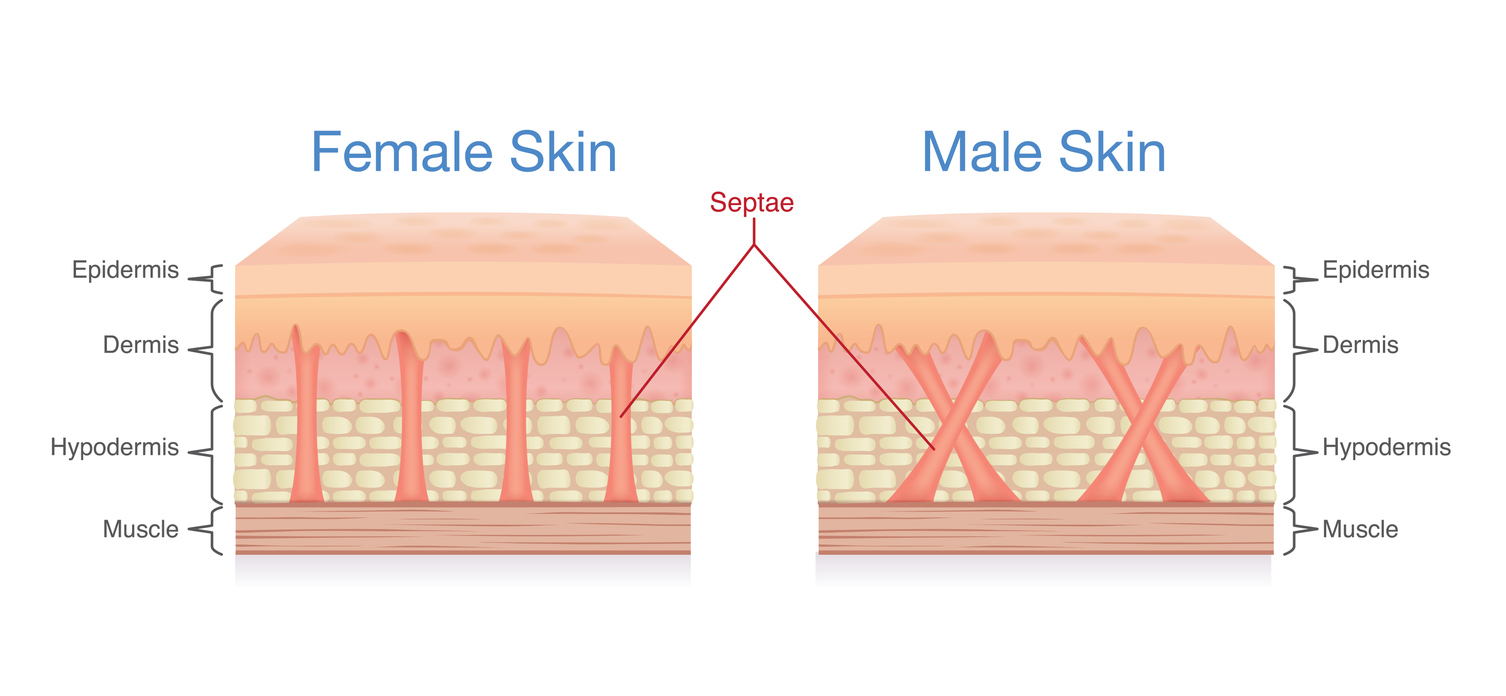
Another interesting structural difference between male and female skin occurs deeper in the subcutaneous layer, where fat and connective tissue interact.
Within this layer are fibrous connective tissue bands called septae (or septa). These bands act like internal support structures, anchoring the skin to deeper tissues and dividing fat into small compartments known as fat lobules. The orientation and structure of these septae differ between men and women, largely due to hormones, genetics, and natural fat distribution patterns.
Female Septae Structure
In women, septae tend to run vertically between the skin and underlying tissue. This arrangement allows fat lobules to expand more easily between the connective tissue bands. When fat pushes upward while the septae pull downward, it can create the dimpled or uneven skin texture commonly referred to as cellulite. Hormones such as oestrogen influence how fat is stored in areas like the thighs, hips and buttocks, which is why cellulite most commonly appears in these regions.
Male Septae Structure
In men, the fibrous septae usually form a cross-hatched or diagonal network. This structure provides stronger internal support for the fat layer beneath the skin, helping to keep fat distributed more evenly. As a result, the skin surface tends to appear smoother and cellulite is less commonly visible in men.
These changes can influence how septae interact with fat beneath the skin and may affect skin texture over time.
Ageing and Skin Changes
Ageing affects everyone’s skin, but the patterns can differ between men and women.
Male Skin Ageing
Men tend to experience:
- slower early collagen loss
- deeper wrinkles once ageing becomes visible
- increased sun damage due to historically lower sunscreen use
Female Skin Ageing
Women may experience:
- earlier fine lines
- collagen decline during menopause
- increased skin dryness and sensitivity
This is why preventative skincare and collagen-supporting treatments can be beneficial for both men and women.
Is It Really About Gender or Skin Type?
While biological differences exist, dermatologists increasingly recognise that skin type and lifestyle factors often matter more than gender alone.
Skin is commonly categorised into the following types:
- oily skin
- dry skin
- combination skin
- sensitive skin
- normal skin
Two individuals of different genders with the same skin type may require very similar treatment approaches.
For example:
- An oily-skinned man and an oily-skinned woman may both benefit from treatments targeting excess sebum.
- A woman with sensitive skin and a man with rosacea may both require barrier-supporting treatments and gentle skincare routines.
At ENRICH Clinic and DIV, treatment plans are designed around individual skin assessments rather than assumptions based on gender.
Should Men Pay as Much Attention to Their Skin as Women?
The short answer is yes.
Historically, skincare and cosmetic dermatology were more commonly associated with women. However, this perception is changing rapidly. Men are increasingly interested in maintaining healthy skin, addressing sun damage, and improving skin quality. In Australia, where ultraviolet radiation levels are among the highest in the world, skin health is an important concern for everyone. Men are statistically more likely to develop serious sun damage and skin cancers, partly due to lower sunscreen use and later presentation for medical advice.
Regular skin checks, sun protection, and early intervention for skin concerns are therefore important for both men and women.
Skin Treatments Available at ENRICH Clinic and DIV
Both clinics provide a broad range of dermatology and aesthetic treatments that can address a wide variety of skin concerns.
Skin Rejuvenation Treatments
Modern dermatology offers many non-surgical approaches to support skin quality and collagen production.
Treatments may include:
- laser skin rejuvenation
- radiofrequency treatments
- skin needling
- medical-grade chemical peels
These treatments are commonly used to address:
- fine lines
- uneven texture
- sun damage
- acne scarring
- dull skin
Treatment suitability is always determined during consultation with a qualified practitioner.
Pigmentation Treatments
Pigmentation concerns can affect both men and women.
Common concerns include:
- sunspots
- melasma
- uneven skin tone
Depending on the cause and severity, treatment options may include:
- laser treatments for pigmentation
- targeted skincare programs
- medical-grade peels
Acne and Oil-Control Treatments
Acne can affect people of all ages and genders.
Professional treatments may assist with managing:
- persistent acne
- oily skin
- acne scarring
Treatment approaches may include laser technologies, dermatology consultations, and tailored skincare plans.
Dermatology and Skin Health
Both ENRICH Clinic and DIV focus strongly on medical dermatology, including:
- skin cancer checks
- treatment of benign skin lesions
- management of inflammatory skin conditions such as rosacea and dermatitis
This integrated approach ensures both cosmetic and medical skin concerns can be addressed.
Everyday Skin Care Habits for Healthy Skin
Regardless of gender, there are several core habits that support skin health.
Sun Protection
Australia has some of the highest UV exposure levels in the world. Daily sunscreen use is one of the most effective ways to prevent premature ageing and reduce the risk of skin cancers.
Gentle Cleansing
Using a cleanser appropriate for your skin type helps maintain the skin barrier and remove excess oil, pollutants, and sunscreen.
Hydration
Moisturisers support the skin barrier and help maintain hydration levels.
Professional Skin Advice
Seeing a dermatologist or experienced practitioner can help identify concerns early and guide personalised treatment plans.
 FAQs: Male vs Female Skin
 FAQs: Male vs Female Skin
Is men’s skin really different from women’s skin?
Yes. Male skin is generally thicker and produces more oil due to testosterone, but skin type and lifestyle often play an equally important role.
Do men age differently than women?
Men may develop wrinkles later, but they can appear deeper due to thicker skin and stronger facial muscles.
Do men need skincare routines?
Yes. Basic skincare such as cleansing, moisturising, and sun protection is beneficial for everyone.
Are skin treatments different for men and women?
Treatment choices are usually based on skin condition and skin type rather than gender alone.
Does shaving help skin health?
Shaving can remove dead skin cells but may also cause irritation or ingrown hairs if not done carefully.
Can hormones affect skin appearance?
Yes. Hormonal fluctuations can influence oil production, pigmentation, and collagen levels.
Is sunscreen important for men?
Absolutely. Sun protection helps reduce the risk of sun damage and skin cancers.
A Personalised Approach to Skin Health
While male and female skin have biological differences, the most effective skincare approach is one that considers the individual characteristics of each person’s skin.
Skin type, lifestyle, environmental exposure, hormones, and genetics all play an important role in determining how skin behaves and how it should be treated.
At ENRICH Clinic and the Dermatology Institute of Victoria, the focus is on personalised dermatology care and advanced skin treatments designed to support long-term skin health.


